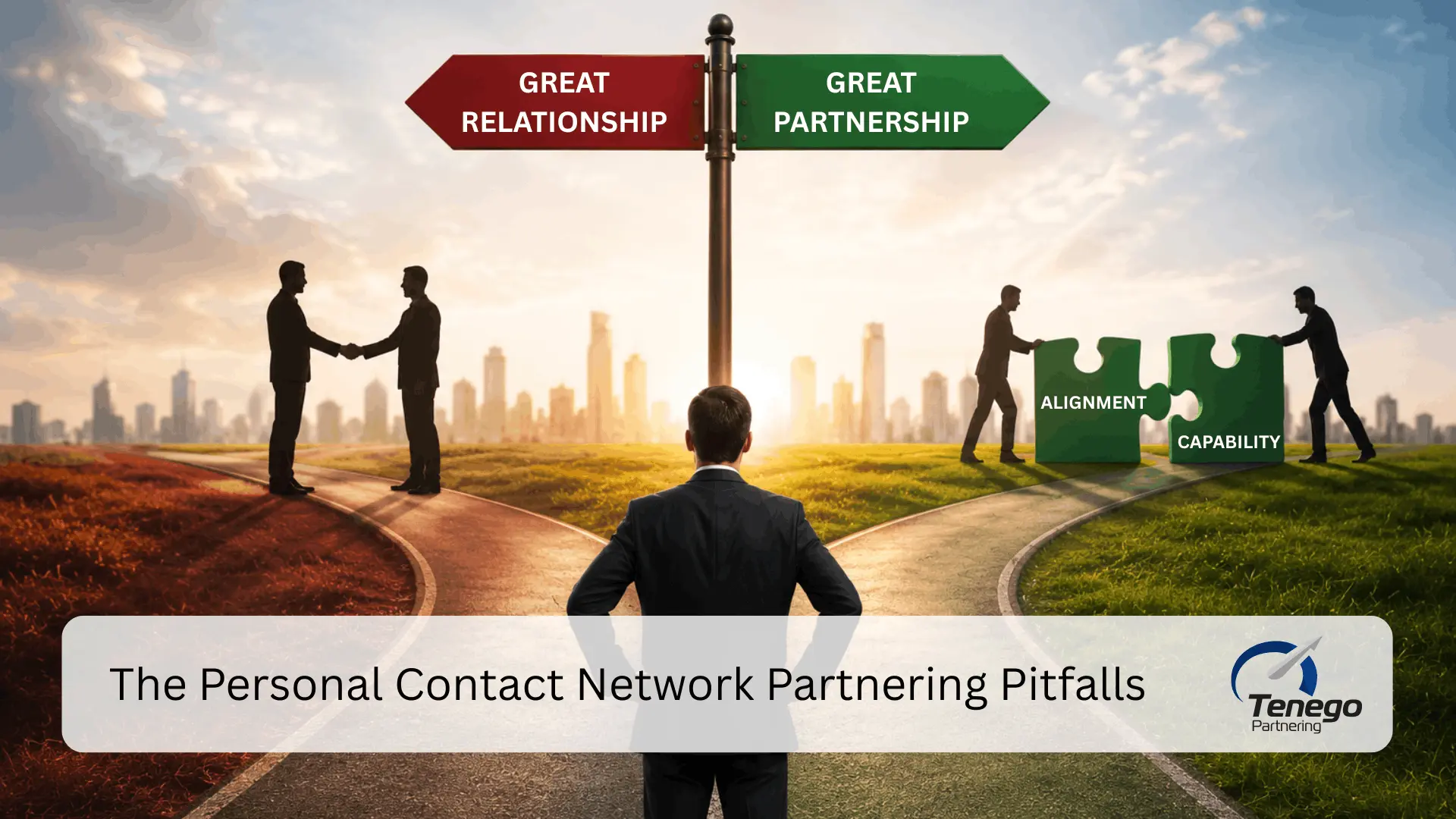
A great relationship doesn’t equal a great partnership
“A stitch in time saves nine” – unknown
“Every day in design saves 10 in development.”
– “Dynamics of Software Development” – Jim McCarthy (1995) Leader of Microsoft Visual C++ team
Table of Contents
The Assumption (The Trap)
It’s a common assumption. With a strong personal network, and influential board members, the company can get started building their partner network very quickly.
It feels intuitively correct when you are looking to scale, to work through your network. The trap is that you assume that because you have a foot in the door with a friendly face, you can skip the hard work and fast-track your way to a signed, proactive sales partner. You fall into the trap of believing that a strong existing personal relationship is all it takes to make a partnership work.
The Challenge(s):
The credibility of a personal relationship or introduction can carry the partnership discussion far beyond what actually makes sense for the business. Because everyone is friendly and eager to help, the entire partner recruitment process becomes dangerously casual.
1. Too friendly and too relaxed in first partner meeting
You get the meeting, the vibe is excellent, and the potential partner seems enthusiastic about your software. So, what happens next? As your ‘friends’, you skip some of the formal evaluation steps. You worry that introducing a structured business assessment will ruin the mood, so you skip the seemingly hard questions, and talk about the possibilities and pitching the product, with many assumptions on how the partnership will work.
2. Partner Fit Evaluation feared as partner interrogation, rather than preparation for planning
However, enthusiasm is never a substitute for Partner Fit alignment. By relying on a friendly chat and your gut instinct instead of conducting a mutual, evidence-based assessment, you are a best putting off challenges harder addressed down the road, and at worst much wasted effort and frustration of not working at all. A great personal relationship is important, but does not mean they have the capability, the business model, or the specific target customer base to successfully sell your solution.
3. Long discussions on big plans, rather than starting small to validate
Continuing down this path of assumptions and unanswered questions has consequences. You and your potential partner can fumble from meeting to meeting, month after month, sustained only by both wanting to work together, wanting to be right and the hope that the pieces will fall into place. You are accumulating massive “wasted miles” in your partner recruitment efforts, chasing a relationship that was never structurally equipped to sell your product in the first place.
4. Misspending the goodwill of personal contacts and relationships
Eventually, the hope fades into the harsh reality that this was a long shot from day one. You are left draining enterprise value and burning precious runway on a mismatched alliance. Worst of all, you damage your credibility. When the partnership inevitably stalls out and fails to produce revenue, you now have to sheepishly explain to your board member why you burned through their best industry contact on an unvalidated whim.
The Hard Questions:
As a leader, it is your job to challenge the unspoken, the assumed, the elephants in the room. Before you spend another moment executing this approach or ask your contacts for another favour, take these uncomfortable questions into your next team meeting:
1. The Readymade Contact Base Reality Check
Are we burning our one chance to impress key industry players, unwisely using our personal networks, and dangerously assuming that ‘who we know’ overrides the absolute necessity of a rigorous Partner Fit Evaluation alignment approach?
2. The ‘Gut-Instinct’ Blind Spot
Do we dangerously rely on a great conversational vibe and mutual enthusiasm to commit to a partnership, skipping the basics partner fit evaluation steps because we mistakenly believe structure seems over formal, challenging the partner or will kill their excitement?
3. The Credibility Exposure
Are you allowing your ego to get in the way, deciding that simply ‘liking them’ is enough, completely ignoring the necessary mutual business alignment, and just hoping that it works out in the end?
Take the Positive Path
A personal contact network is a great asset, and a reflection of the goodwill you have created in the industry. Getting a foot in the door with the credibility to be taken seriously is often the hardest part of partner recruitment.
Where personal contacts and goodwill is at risk, then the greater reason to address the risks early with a rigorous mutual partner fit evaluation process to ensure you don’t burn favours on a structurally misaligned partnership from the start. If this is a challenge for you, then ask colleagues to complete the process thus removing your relationship and egos from any potential strain.
Before you make your next move and burn through your best industry contacts, find out where your plans need review and bolstering. Take the Tenego Partnering Diagnostic evidence-based next step. In just a few minutes, you will diagnose your current stage of partnering maturity.
You can also explore Tenego’s courses and supports to further structure your approach and ensure your team understands the process-driven methodology. Visit www.tenego.com