Pushing partners for immediate results can damage trust, while nurturing relationships creates long-term partner success and sustainable revenue growth.
“The trouble with most of us is that we would rather be ruined by praise than saved by criticism.”
– Norman Vincent Peale
“Control leads to compliance; autonomy leads to engagement.”
– Daniel Pink (from Drive)
“You can’t force your will on people. If you want them to act differently, you need to inspire them to change themselves.”
– Phil Jackson, Chicago Bulls NBA Coach
The Assumption
“We manage our direct sales team with aggressive monthly quotas, so we should pressure our partners for immediate results the exact same way.”
When a tech company is achieving successful growth through its direct sales organisation, the leadership can fall into the trap of assuming that partners’ sales teams will operate similarly and can be managed the same way. – The Direct Sales Success Leads to Partnering Success Assumption.
The attraction of working with partners is to get immediate access to partner’s existing customer base, and their influence on these customers, getting in front of decision makers faster, getting faster decisions and faster sales. – The Instant Partners Sales Pipeline Assumption.
The multiple assumptions here include are that your solution is aligned the partner’s business, the partners trusts and believes in your solution, the partner can ask one of more of its sales team to drop everything and work full time on your solution, it has the relevant relationships to get customer meetings at short notice, and just getting this meeting means qualified leads.
The Challenge
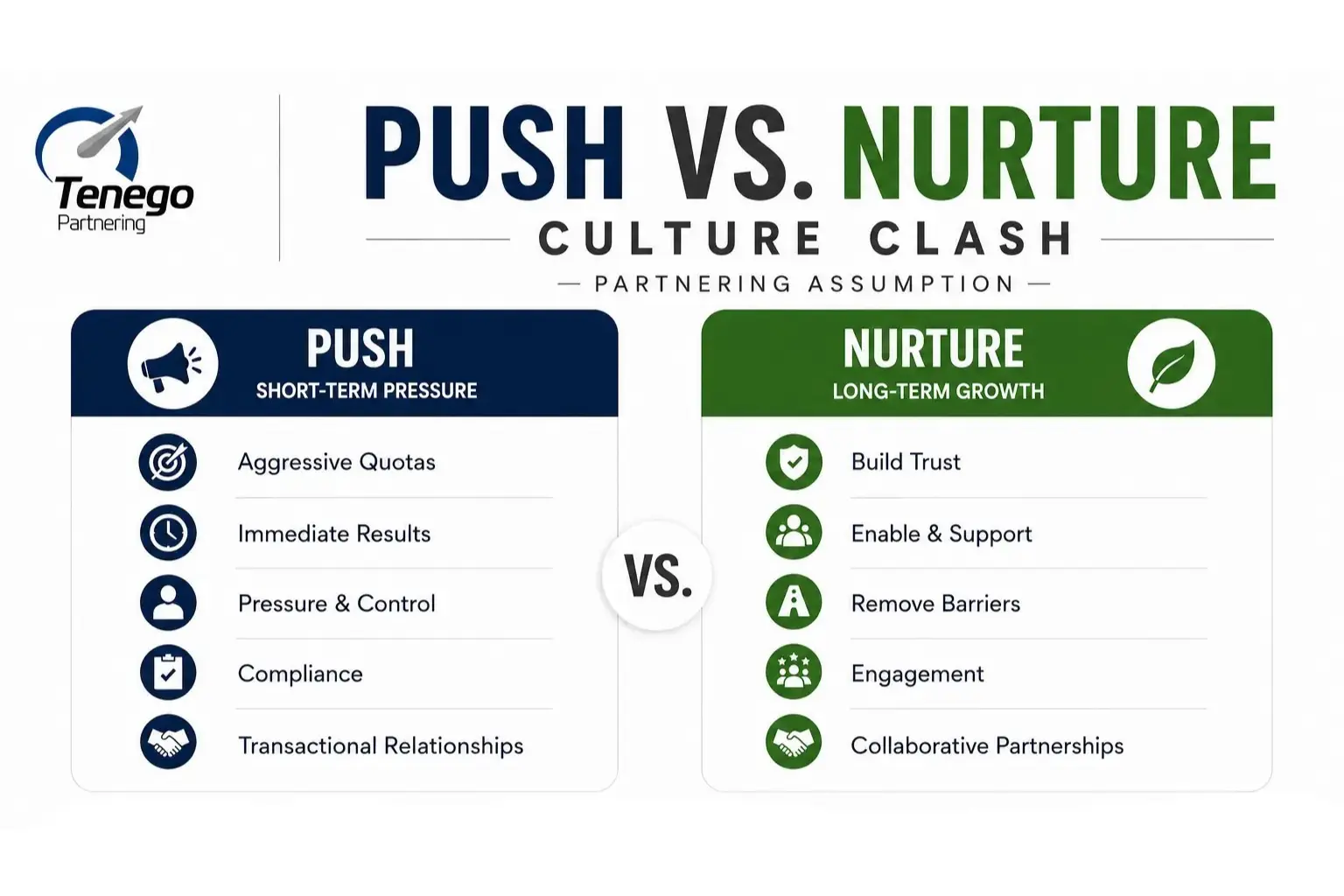
The “Push vs. Nurture” Conflict Challenge finds a direct sales mindset fighting a partnering mindset creates toxic internal friction. Partners are independent companies, not your employees, and they will not respond to a brute-force “push” culture. Demanding immediate, short-term sales results instead of nurturing long-term market capabilities destroys trust and forces partners to prioritise other, more collaborative vendors.
- Trust takes time.
- Partners are independent organisations, as they chose to be, who are already busy with their own plans, before you came along, so don’t expect them to drop everything and focus on your plans.
- They may have chosen to partner with you, and work with you, but they don’t want to report to you.
- If you’re not helping them, you are in their way, distracting them from their plans.
The Hard Question for you and your team?
“Are we applying a brute-force, quota-pushing direct sales management style to independent partner companies, instead of a nurturing, collaborative approach that builds long-term joint success?”
How are you helping your partners trust you and your solution?
How are you helping your partners with their plans, rather than just yours?
How do you get your partners to contact you as you are helping them, and they enjoy working with you?