You have decided that a partner channel network is the key to your international growth. You have the product and the ambition. However, you are likely staring at a blank page, unsure of what the daily execution of that strategy looks like.
For many tech founders, “Starting in Partnering” is a period of unstructured, ad hoc engagement. Usually, the CEO or a senior sales leader manages a few referral partners, but deal flow is inconsistent because there is no repeatable and scalable model for growth.
Pre-requisite 1: Your Objectives and Understanding Internal Challenges
- What is your goal for 12 months’ time?
- How many partners do you want?
- What do you expect from your partners?
- Do you want faster revenue, increase market access and/or building foundation for more scalable growth?
What is your Partnering Readiness and what are your internal challenges to partnering, across:
- Proven Customer Proposition
- Product Readiness for partners
- Proven Marketing and Sales Process
- Partner friendly culture
- Read more here: Culture: Direct Sales Mindset Fighting a Partnering Mindset– What most Tech CEOs get wrong when Starting in Partnering #3
Pre-requisite 2: Your Partnering Strategy
Your execution plan is only as good as the strategy at its base. Before committing to a 12-month plan, you must define Partnering Strategy, with clarity on:
- Target Partner Company Types, with Target Partner Profiles
- Partner Fit – how your solution fits within a partner’s business
- Partner Proposition – how you will help your partners meet their goals
- Partner Enablement – how you will onboard and support partners in selling and delivering your solutions
When starting out, you may have limited market evidence on the above details, then your plan must include a validation phase for each aspect to be developed.
Do you need to review your Partnering Strategy?
Start here with The Partnering Strategy Review Checklist
Your Partnering Execution Plan Streams, Vision and Targets
For each activity stream, you define your targets, and then you set out the activities to take you in the right direction to deliver on your target. You can’t manage a result, but only the activities that produce the results. Set out your monthly activities against each focus area or activity stream.
Every plan accepts that there will be “unknown unknowns”. You can only see so far ahead, an all you can do is plan for what you know, with greater detail for the three months ahead, prioritising risks and any known unknowns.
For those starting out, the focus is on the fastest learnings. That means focusing on target partner company types and sizes that are easiest to get access to decision makers, providing faster feedback, faster decisions, and earliest revenues. Be cautious on chasing the biggest opportunities until you have proven your path a little.
Your Partnering Execution Plan Activity Streams:
1. Target Partner Profiles and Partner Lists
Your Target Partner Profiles is one of the key outputs of your Partnering Strategy. Your Partner Profiles define your partner company types, their characteristics, any exclusions and outline partner fit, defining how your solution will fit into your target partners business.
At the start, be sure to add to your list, existing contacts, and any introductions you can gain from your customers.
2. Partner Fit Evaluation (Partnering Success Pillar)
Partner Fit is the number one partnering success factor. The Partner Fit Evaluation Template objectively defines the approach and discussion points to understand the partners business and how you can fit and work together. Partner Fit impacts every stage in the working with your partners, from prioritising who to contact, qualifying them on first contact, at the critical Partner Fit Evaluation stage deciding to progress or not. Partner Fit Evaluation also feeds in Partner Assessment and Enablement Planning below.
3. Partner Proposition Development (Partnering Success Pillar)
Your Partner Proposition outlines the benefit to the partner, beyond a simple “revenue share”, to a compelling business case that justifies and motivates a partner to work with you, and change their business behaviour in your favour.
4. Partner Support and Enablement (Partnering Success Pillar)
During the partner recruitment process, building on your Partner Fit Evaluation, a Partner Assessment and Planning phase feeds into Partner Onboarding and Enablement plan defining the supports, more than training, you will provide to your partner to establishing your business rhythm. Your plan should define the first 90 days of the relationship to enable immediate market engagement, and build on this progress. Your Partner Enablement plan can be a key part of your Partner Proposition, focusing on improving your partner’s business in relevant areas and not sales and product training.
5. Partner Recruitment
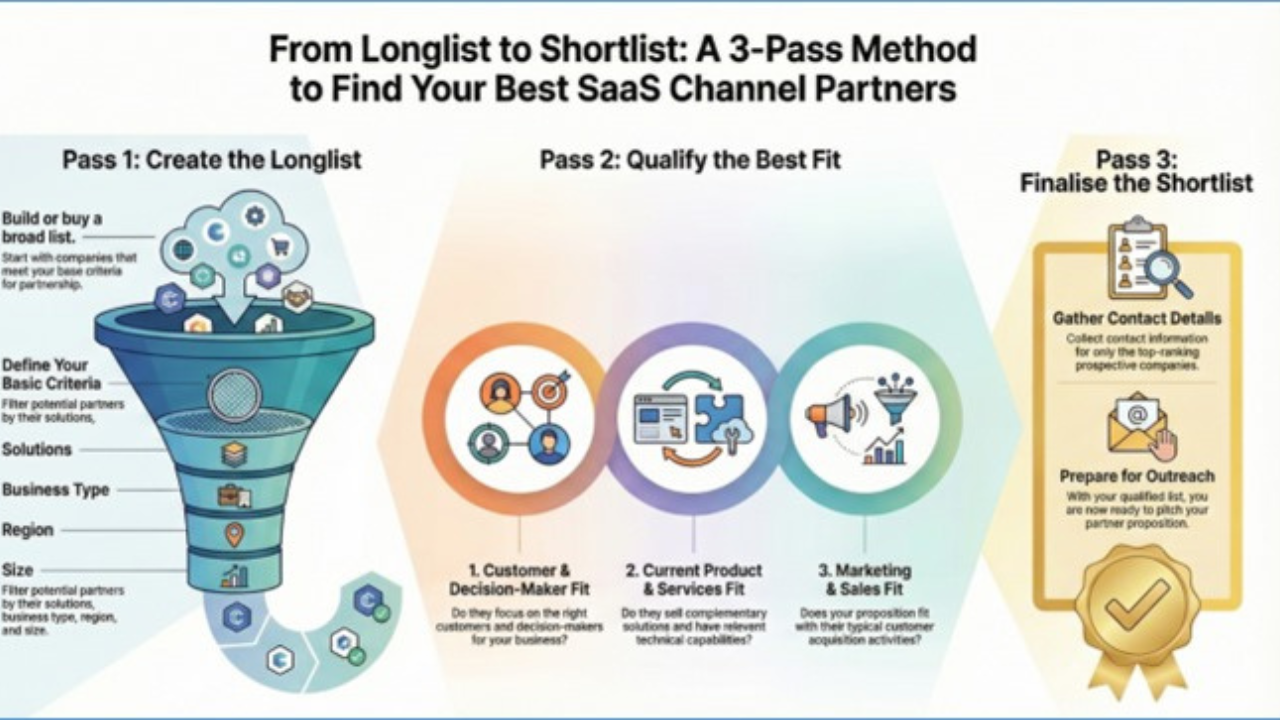
You need a structured, scalable process to identify, qualify, secure interest, evaluate, plan, agree and onboard. Your outreach approach can vary depending on many factors, leading to direct contact, outbound email campaigns, LinkedIn outreach, trade shows, and weekly demo webinars.
6. Partner Management
From Partner Onboarding and your agreed plan, its important that you set out a relevant cadence of meetings, with multi-level relationships from CEO/business sponsors to the various business functions involved in the partnership; marketing, sales, delivery, product and partnering teams. Set the tone from the start with responsibilities on both sides to ensure progress and check-in at your regular meetings at different levels.
7. Team and Organisational Change
Your plan needs to be resourced, with someone to lead, with the support across the business, whose targets may be focused on direct sales.
Introducing partners into your business requires change, that needs to be managed. You must address internal and readiness barriers, identified in the partnering strategy.
Partnering success requires many capabilities to be developed, from Partnering Strategy, Partnering Programme Development, Partner Recruitment, Sales Support and Partner Management. Be careful in expecting to have all these capabilities in a single partnering lead in your new Partnering Plans.
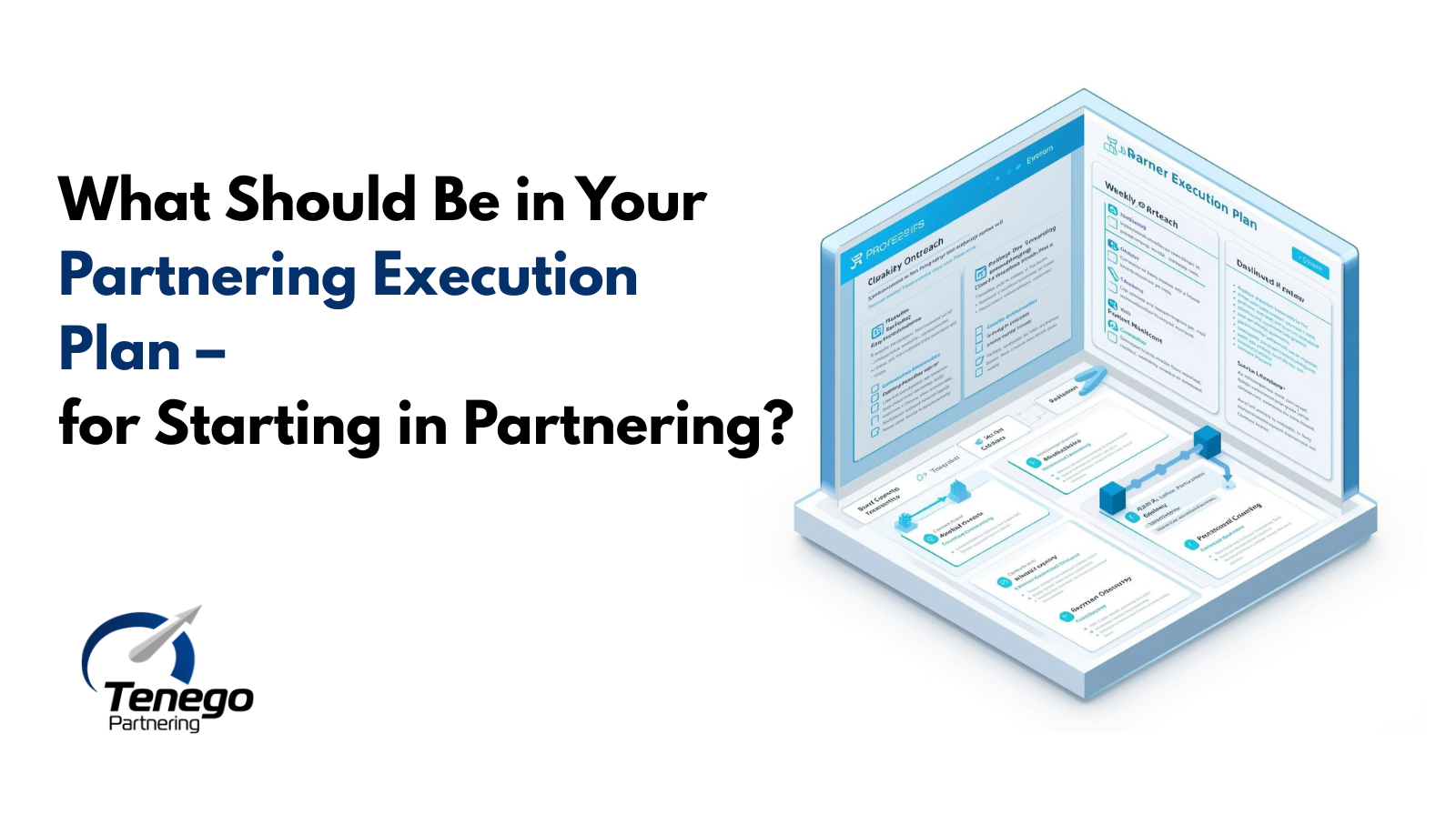
To get you started we’re providing an example plan, with an explainer video.
Click here to Download the “Starting in Partnering Execution Plan Example”
or book an advisory session with Tenego to review your plans.